The police suspect the recces were part of a larger conspiracy to target the historic monument on January 26, which might have failed due to intense patrolling in the area at the time.

As many as 16 wickets fell on the opening day as visitors Hyderabad were left reeling at 88/6 after bundling out Jammu and Kashmir for 170 on the opening day of their Ranji Trophy Elite Group D match in Jammu on Sunday.

A soldier critically injured in a gunfight with terrorists in the Udhampur district succumbed to his injuries. A joint search operation by the Army and police is underway in the remote forest area.

Chief Minister Omar Abdullah strongly criticized linking Jammu and Kashmir's political future to acts of terror, asserting that Pakistan cannot influence decisions on the region's statehood through terrorism. He announced a signature campaign to press for the restoration of statehood.
'India has experienced any number of doctors, engineers, and individuals from professional backgrounds being implicated in terrorism. This is not a novel development.' 'These are mobilisations of opportunity. One does not exclusively associate with one's own kind. A comprehensive conspiracy requires diverse skill sets.' 'One needs individuals with local community contacts, those possessing physical capabilities, technical expertise -- an entire spectrum of capacities.'
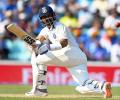
Mumbai off to flourishing start in SMAT, beat Railways by 7 wickets
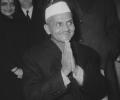
The high point of the 19 Shastri months was the 22-day war that he fought against great odds and won in principle, even if military historians often call it a stalemate. Pakistan saw a great opportunity to conquer Kashmir and lost. It was the last time they had the relative strength militarily and diplomatically to take Kashmir. Shastri's resolve buried that dream forever, points out Shekhar Gupta.

'Previously, contributing only 25 per cent of material costs, states now face burdens of 40 per cent to 100 per cent of total costs, ensuring poorer states will curb project approvals, directly stifling work demand.'

The encounter between security forces and terrorists in the Gudar forest area of Kulgam, Jammu and Kashmir, has entered its second day. Two terrorists and two soldiers have been killed in the ongoing gunbattle.

The Union Cabinet on Friday approved Rs 11,718 crore for conducting the Census of India, 2027, which would include the caste enumeration for the first time.

A two-member team of the United Nations High Commissioner for Refugees (UNHCR) met Rohingya Muslims at a slum in Jammu amid a heated debate whether the illegally settled immigrants be provided water and electricity.

As night fell over Chositi village, rescuers worked frantically and pulled out 167 people from under mounds of rubble. Of these, 38 are in a serious condition, officials said. The death toll went up steadily as the day progressed and there were fears it could rise further.

While the white-ball trophy cabinet kept getting heavier, Team India's fortunes in Test cricket swung wildly between hope and despair in 2025.

The police in Haryana have detained two more doctors for questioning in connection with the terror module case.
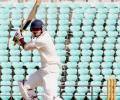
A round-up of the second day's play of the Ranji Trophy matches being played in different parts of the country.
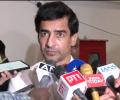
'He was always a people's person. Don't forget he had been a Delhi captain in a team that had a lot of big stars, India players. They played under him and he managed them fairly well.'
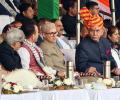
'Omar Abdullah presented Delhi as a villain in front of the people of Jammu Kashmir before elections and now is shaking hands with them.'
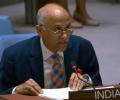
In a strong retort against Pakistan in the United Nations Security Council, India on Monday said its neighbour as a country that 'bombs its own people' and conducts 'systematic genocide'.

Indian Army Builds Bridge in 18 Hours to Rescue Villagers.

Security agencies in Jammu and Kashmir are facing a new threat from 'bedroom jihadis' who use social media to spread misinformation and incite communal discord. These individuals, operating from their homes, are part of a sophisticated cross-border effort to destabilize the region by disseminating inflammatory content and propaganda.

The government plans to introduce three bills in Parliament to address the removal of a prime minister, Union minister, chief minister, or minister of a Union Territory when arrested or detained on serious criminal charges.

He will hold the office till February 9, 2027.

Jammu and Kashmir Lieutenant Governor Manoj Sinha and Chief Minister Omar Abdullah along with scores of Srinagar residents participated in a Tiranga Yatra along the famed Dal Lake.
'There'll be extended periods where things aren't working in your favour. But if you believe in the cause profoundly, then you simply persevere.'
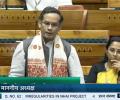
The Congress on Monday accused Prime Minister Narendra Modi of attempting to 'rewrite history' and giving a 'political colour' to the Vande Mataram debate, and asserted that no matter how much the Bharatiya Janata Party tries, it will not be able to put a single blot on the contribution of Jawaharlal Nehru.

Modi said, "I can feel that the blood of every Indian is on the boil after seeing the pictures of the terrorist attack. I once again assure the affected families that they will get justice, and justice will be definitely done. The perpetrators and conspirators of this attack will be served the harshest punishment."
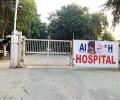
More than 200 doctors and staff at Al Falah University here are under the scanner of the investigative agencies following the blast in a car near the Red Fort on November 10, sources said.

The Federation of Western India Cine Employees (FWICE) urged Prime Minister Narendra Modi to stop the telecast of Sunday's India vs Pakistan Asia Cup match in Dubai.

On Tuesday, October 29, morning, the security forces gunned down two more terrorists holed up in the forest near a village in Akhnoor, taking the number of terrorists killed in the 27-hour gunfight near the Line of Control to three.
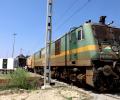
On Thursday, September 11, 2025, following the closure of the Srinagar-Jammu national highway, the Indian Railways arranged for special parcel vans to transport apples from Kashmir's orchards to Delhi.
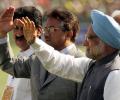
Jammu and Kashmir Chief Minister Omar Abdullah has said that India and Pakistan came closer to resolving the Kashmir issue during the Manmohan Singh-led UPA government. He added that he does not expect a return to that situation in his lifetime. Abdullah lauded Singh's efforts on Kashmir, including the setting up of working groups on the issue, and said he practically initiated measures for the return of displaced Kashmiri Pandits. The chief minister also praised Singh's contribution to India's economic development.
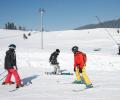
Around 300 athletes were expected to compete in four snow sports -- ski mountaineering, alpine skiing, snowboard, and Nordic skiing -- in the games, which had been due to be held from February 22 to 25.

Rescue operations continue in Kishtwar, J&K, following a devastating cloudburst. Anxious relatives cling to fading hope as the search for the missing enters its third day.

In a significant shift, Kashmiris from villages once considered strongholds of militancy have joined the condemnation of the recent massacre of 26 people in Pahalgam, raising slogans against terrorism and expressing solidarity with the victims. This unprecedented display of public sentiment across the valley marks a possible turning point in the region's fight against violence.

A car dealer from Faridabad has been detained in connection with the Red Fort blast case. Delhi Police has directed second-hand car dealers to verify and share details of recent vehicle sales.
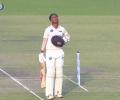
Jharkhand''s Kumar Kushagra slams double-ton against Baroda in Ranji Trophy
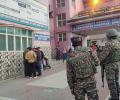
Jammu and Kashmir Lieutenant Governor Manoj Sinha dismissed two government employees, both teachers, for their alleged links with terrorists. The action is part of Sinha's zero-tolerance policy against terrorism and a broader crackdown on the terror ecosystem within Jammu and Kashmir.

Investigation into the Red Fort blast reveals links to a Jaish-e-Mohammad module, leading to arrests and the seizure of a large quantity of explosives and weapons.

Hours before the blast in Delhi, eight people, including three doctors, were arrested and 2,900 kg of explosives were seized with the uncovering of a "white collar" terror module on Monday.

A Delhi court has granted Lok Sabha MP Engineer Rashid, currently jailed on terror funding charges, permission to vote in the upcoming Vice Presidential election.
